Germany has been the centre of women's tennis in the past weeks with a home tie in the Fed Cup and currently the Stuttgart event boasting the world's top 8 players in the post qualifying draw of 28.
Unfortunately for the German crowd, results have not fallen the way anticipated or at least hoped. Australians Sam Stosur and Jarmila Gajdosova stunned the favourites and earned their team a return spot in next year's elite world group. Neither player had posted great results against top 20 players this season - Gajdosova in fact had lost just about all remaining confidence in her game.
Yet Sam won both her singles - the first against a very in-form Angelique Kerber, and Jarmila contributed one of her best ever performances at the highest level when overcoming big serving Julia Goerges, giving the Aussies a 2-0 advantage on Day One of the tie.
Andrea Petkovic, returning from injury, was Stosur's second victim, and 3-0 was sufficent for the big upset to come to fruition.
Come Stuttgart, and Goerges was defending her title at home. She was joined in the draw by fellow Germans Petkovic, Kerber, and wildcards Kristina Barrois and fast rising star Mona Barthel (already a winner in Hobart this year).
The good news for the locals focused on Barthel and Kerber - Barthel knocked Ana Ivanovic out in the first round, then thrashed last years Roland Garros runner-up Marion Bartoli to reach the quarters. The trouble Mona had previously caused Azarenka at Indian Wells (third set tie break for Vika to win) repeated itself as the world's best player battled her way to another three set win, 7-5 in the third. Some of the best tennis to watch made itself available in this contest, and Barthel will likely become her nation's highest ranked player if not sometime this year, very soon after.
Angelique Kerber also took a liking to disposing of a former number one when she surrendered a mere 3 games on route to embarrassing Caroline Wozniacki in the second round. Only Petra Kvitova prevented the Kerber run from continuing to the semis, as the reigning Wimbledon champ extended her indoors success to 27 wins in a row in the quarter final.
The disappointment for Germany began with Julia Goerges losing to Sam Stosur in the second round - although the match was close, Julia would have wanted her title defence to last a little longer.
However the low light came with the nasty injury to Andrea Petkovic, who had been locked in a tense second set with Vika Azarenka before damaging an ankle badly enough to sideline her for 3 months and miss both the French Open and Wimbledon.
Yes, right at this moment not the best results for Germany, but plenty to look forward too with 4 players in the top 20, plus Mona Barthel not far behind. The top ten by year end may well see 2 German faces.
Saturday, 28 April 2012

Thursday, 22 March 2012
Roger's Rebirth
My predictions for 2012 included the rise in rankings back to the top 5 of Juan Martin Del Potro, and to a certain extent that has occurred, but he has been consistently dogged by the presence of Roger Federer.
After losing to Baghdatis in Sydney, Del Potro has looked the goods, except the four times he has faced the revitalised Swiss sensation. Federer has smashed the Argentine in straight sets on each occasion, including the two big ones so far - Aus Open and Indian Wells. What does this tell us, apart from the fact that Roger has not completed his plan of revenge for the 2009 US Open defeat?
Simply that:
1. Del Potro has the game, once fully fit, to return to the top, and perhaps threaten the increasingly boring existence of the "top 4" or more correctly "top 3 + Andy".
2. Roger Federer is now playing the type of tennis that he we know he can, at a level of consistency lacking in the past couple of years. He is the form player on tour without doubt, and right now would warrant favouritism in any match up, even with Novak Djokovic.
The true test with Djokovic in 2012, though, is not the win loss record as compared with his unprecedented 2011. There is no secret that the ambition of the Serbian champ is to focus on the 4 Grand Slam events, and he is 1 for 1 in those thus far.
Federer is a real possibility of regaining the number one ranking not because he is suddenly playing any better - his tennis at the end of 2011 was as good as anyone - he did win the ATP Masters Cup don't forget. What makes him especially dangerous as of now is the belief that he is the best being once more translated onto the court. Immediately, opponents look less likely to pierce the veneer of the Swiss legend. Even Nadal looks less convincing - only back in January it seemed that he had a demoralised Roger covered with his semi final win in Melbourne. Now the clay courts seem the only chance for Rafa to again take the edge over Federer.
Form is fleeting for most, but history has shown that this sort of tennis from Federer is the stuff that generates a season to savour. Watch out Wimbledon and Flushing Meadows - it could be the 17th and 18th GS success for the master.
After losing to Baghdatis in Sydney, Del Potro has looked the goods, except the four times he has faced the revitalised Swiss sensation. Federer has smashed the Argentine in straight sets on each occasion, including the two big ones so far - Aus Open and Indian Wells. What does this tell us, apart from the fact that Roger has not completed his plan of revenge for the 2009 US Open defeat?
Simply that:
1. Del Potro has the game, once fully fit, to return to the top, and perhaps threaten the increasingly boring existence of the "top 4" or more correctly "top 3 + Andy".
2. Roger Federer is now playing the type of tennis that he we know he can, at a level of consistency lacking in the past couple of years. He is the form player on tour without doubt, and right now would warrant favouritism in any match up, even with Novak Djokovic.
The true test with Djokovic in 2012, though, is not the win loss record as compared with his unprecedented 2011. There is no secret that the ambition of the Serbian champ is to focus on the 4 Grand Slam events, and he is 1 for 1 in those thus far.
Federer is a real possibility of regaining the number one ranking not because he is suddenly playing any better - his tennis at the end of 2011 was as good as anyone - he did win the ATP Masters Cup don't forget. What makes him especially dangerous as of now is the belief that he is the best being once more translated onto the court. Immediately, opponents look less likely to pierce the veneer of the Swiss legend. Even Nadal looks less convincing - only back in January it seemed that he had a demoralised Roger covered with his semi final win in Melbourne. Now the clay courts seem the only chance for Rafa to again take the edge over Federer.
Form is fleeting for most, but history has shown that this sort of tennis from Federer is the stuff that generates a season to savour. Watch out Wimbledon and Flushing Meadows - it could be the 17th and 18th GS success for the master.
Friday, 10 February 2012
Equal Money for Equal Status
Now that the dust has settled on another terrific Australian Open, it is my turn to offer an opinion on the Grand Slam singles money debate. The same old proponents of the dark age theory that men should be paid more than women seem to roll out their tired cries for monetary discrimination each time a five set classic is played before us, most recently the epic Men's Final at Melbourne Park.
Of course these same people, seemingly led by a number of high profile ex male players (many ironically who played in the days where men were financially rewarded to a larger extent than their female counterparts) remain conspicuously silent when a best of five sets match is the antithesis of the Djokovic-Nadal classic. Voices were notable by their absence after the two Australian Open Finals immediately preceding the 2012 version were won in straight sets, but effectively finished as a spectacle long before the final points.
The argument over monetary reward is misplaced and hides what truly could be debated in a much clearer atmosphere.
The reason why singles champions, and as a corollary all other participants in the draw, are awarded equal prize money is because the same weight of prestige is given to the achievement of winning a Grand Slam singles tournament, irrespective of gender. Try telling me that you rate any of Martina Navratilova's Wimbledon titles as less prestigious than one of Roger Federer's famous victories. Do all of Chris Evert's runner-up performances pale in significance to that of say David Nalbandian or Mark Philippoussis? Of course not.
Equal reward for an equal achievement. How many sets that achievement took or how many minutes spent on court to determine a title has no bearing on the USD, AUD or Euros that each of the Grand Slam tournaments apportions to the players. God forbid if we tried that for sport in general - I guess we would end up dishing out higher level gold medals for 800 metre runners due to completing more laps than the 400 metre winners.
The debate, if it is to be had, is about whether best of three sets is still the best method for deciding women's singles matches at Grand Slam level. Remember, for all the trumpeting of how good men must be for needing to win three sets to advance, it only occurs (outside of the Davis Cup which is a team event and not a prize money issue) at the four Grand Slam events. Elsewhere the men play best of three, just as the women.
The alternative then is for men's singles at Grand Slam tournaments to be decided in best of three matches. I am not proposing this, but the Australian Open 2012 offers some interesting statistics concerning the necessity of playing best of five sets, and why the women could possibly say "why go to those lengths when we can reach a decision more efficiently". My opinion is pretty much the "if it's not broke, don't fix it" variety.
Anyway for your numerical pleasure.
Of the 127 Main Draw men's singles matches played at the Australian Open this year, 76 matches had players leading two sets to love (matches which ended due to retirement are excluded). Of these 60 were won in straight sets, 6 in four sets and 5 in five sets. Only 5 saw the player leading after 2 sets proceed to lose in five sets.
Further, of the matches where a player led two sets to one after splitting the opening two sets, only 8 saw that player eventually lose, and 7 of those matches were in the first or second rounds. (Yes the other one was quite significant - Djokovic in the semi final against Murray came back from a two sets to one deficit to win and ultimately win the title)
However my point is not to argue that the configuration of men's matches at Grand Slam level be changed, but that to change the design of women's matches to best of five would do little to change results of matches currently decided by winning the first 2 sets or by winning 2 of three. Empirical evidence suggests that playing longer does not guarantee significant changes.
And finally, to those that argue that time on court should be the measure of earnings, I suggest that quality of time on court be considered above all else. Sustained excellence over five sets as exemplified in the 2008 Wimbledon masterpiece between Nadal and Federer is rare, and having to strive for that third set can often diminish the standard of tennis on show, as matches drag into the third and fourth hours.
Why should first round thrashings handed out by top female players be extended to three set models of the same thing. The mercy rule applied to Azarenka's early victims in Aus Open 2012 after two sets saved her opponents from another 15-20 minutes of embarrassment, whereas Djokovic's unfortunate first, second and third round prey had a torturous three sets before the white flag could be raised.
Let the men do what they do to achieve Grand Slam singles glory, but don't ever question the women's worth purely on length of matches. Some of the most famous matches have been best of three set encounters of which no one complains - e.g. 1981 US Open Final where Tracy Austin came from a 1-6 first set against Martina Navratilova to win two tie break sets and the title.
The money for Grand Slam tournament should always be based on the prestige of the tournament concerned, and for tennis at the highest level that must remain free of gender bias.
The separate question of whether matches should be decided by best of three or best of five is seemingly a seasonal poser, based on the occasional blockbuster five setter witnessed at a Grand Slam tournament, one such as the Men's Final so pleasurably experienced on 29-30 January 2012.
Of course these same people, seemingly led by a number of high profile ex male players (many ironically who played in the days where men were financially rewarded to a larger extent than their female counterparts) remain conspicuously silent when a best of five sets match is the antithesis of the Djokovic-Nadal classic. Voices were notable by their absence after the two Australian Open Finals immediately preceding the 2012 version were won in straight sets, but effectively finished as a spectacle long before the final points.
The argument over monetary reward is misplaced and hides what truly could be debated in a much clearer atmosphere.
The reason why singles champions, and as a corollary all other participants in the draw, are awarded equal prize money is because the same weight of prestige is given to the achievement of winning a Grand Slam singles tournament, irrespective of gender. Try telling me that you rate any of Martina Navratilova's Wimbledon titles as less prestigious than one of Roger Federer's famous victories. Do all of Chris Evert's runner-up performances pale in significance to that of say David Nalbandian or Mark Philippoussis? Of course not.
Equal reward for an equal achievement. How many sets that achievement took or how many minutes spent on court to determine a title has no bearing on the USD, AUD or Euros that each of the Grand Slam tournaments apportions to the players. God forbid if we tried that for sport in general - I guess we would end up dishing out higher level gold medals for 800 metre runners due to completing more laps than the 400 metre winners.
The debate, if it is to be had, is about whether best of three sets is still the best method for deciding women's singles matches at Grand Slam level. Remember, for all the trumpeting of how good men must be for needing to win three sets to advance, it only occurs (outside of the Davis Cup which is a team event and not a prize money issue) at the four Grand Slam events. Elsewhere the men play best of three, just as the women.
The alternative then is for men's singles at Grand Slam tournaments to be decided in best of three matches. I am not proposing this, but the Australian Open 2012 offers some interesting statistics concerning the necessity of playing best of five sets, and why the women could possibly say "why go to those lengths when we can reach a decision more efficiently". My opinion is pretty much the "if it's not broke, don't fix it" variety.
Anyway for your numerical pleasure.
Of the 127 Main Draw men's singles matches played at the Australian Open this year, 76 matches had players leading two sets to love (matches which ended due to retirement are excluded). Of these 60 were won in straight sets, 6 in four sets and 5 in five sets. Only 5 saw the player leading after 2 sets proceed to lose in five sets.
Further, of the matches where a player led two sets to one after splitting the opening two sets, only 8 saw that player eventually lose, and 7 of those matches were in the first or second rounds. (Yes the other one was quite significant - Djokovic in the semi final against Murray came back from a two sets to one deficit to win and ultimately win the title)
However my point is not to argue that the configuration of men's matches at Grand Slam level be changed, but that to change the design of women's matches to best of five would do little to change results of matches currently decided by winning the first 2 sets or by winning 2 of three. Empirical evidence suggests that playing longer does not guarantee significant changes.
And finally, to those that argue that time on court should be the measure of earnings, I suggest that quality of time on court be considered above all else. Sustained excellence over five sets as exemplified in the 2008 Wimbledon masterpiece between Nadal and Federer is rare, and having to strive for that third set can often diminish the standard of tennis on show, as matches drag into the third and fourth hours.
Why should first round thrashings handed out by top female players be extended to three set models of the same thing. The mercy rule applied to Azarenka's early victims in Aus Open 2012 after two sets saved her opponents from another 15-20 minutes of embarrassment, whereas Djokovic's unfortunate first, second and third round prey had a torturous three sets before the white flag could be raised.
Let the men do what they do to achieve Grand Slam singles glory, but don't ever question the women's worth purely on length of matches. Some of the most famous matches have been best of three set encounters of which no one complains - e.g. 1981 US Open Final where Tracy Austin came from a 1-6 first set against Martina Navratilova to win two tie break sets and the title.
The money for Grand Slam tournament should always be based on the prestige of the tournament concerned, and for tennis at the highest level that must remain free of gender bias.
The separate question of whether matches should be decided by best of three or best of five is seemingly a seasonal poser, based on the occasional blockbuster five setter witnessed at a Grand Slam tournament, one such as the Men's Final so pleasurably experienced on 29-30 January 2012.
Monday, 30 January 2012
Saving the Best for Last - Novak v Rafa
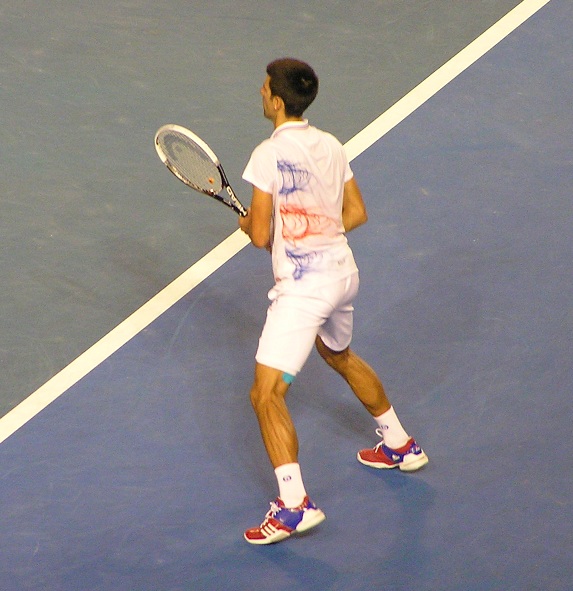
Well the fortnight had come to this - the two best players in men's tennis featured in a match to decide the 2012 Australian Open champion. Rafael Nadal endeavouring to snap the run of finals losses to Novak Djokovic who in 2011 defeated the previous number one in four Masters events and Wimbledon and the US Open. In fact this was to be the third straight Grand Slam men's singles final between these two stars.
Both had played stunning tennis to reach the final - Rafa falling behind Federer before pulling out some of the most thrilling shots to silence the Fed Express, and Djokovic taking almost five hours to quell Andy Murray in a semi final, the same opponent that he annihilated in last year's final. To predict the winner of this year's final was not difficult. To justify why one player should be selected over the other was the tough task. My selection before the tournament was Novak to defeat Roger, and I saw no reason to change my mind just because the opponent was different. That does not mean I was supremely confident in that selection. It was just an educated guess.
First victory for the evening went to Djokovic who correctly picked the coin toss and elected to serve first. The roof now open, everything appeared in readiness for a night to remember.
Two netted errors from Novak and three long or wide from Rafa were countered by a Serbian off forehand winner, in sum total giving Djokovic the 1-0 lead.
Easy response for Nadal with the one notable shot being an ace. 1-1. In the third game, a forehand down the line winner by Nadal for 0-30 followed by one which just about exited the stadium. An ace then a forehand stunner of Novak's own making took the number one seed out of imminent danger, a second of those forehands forcing a Spanish mistake and the scoreboard to change to 2-1.
Nadal comfortable on serve again levelled at 2-2, including a scary moment for Novak where he turned awkwardly on his ankle. Three aces were not enough to counter two brilliant forehands from Nadal and unforced errors from Novak, and Rafa had the first break for a 3-2 lead. Novak threw his racquet and enrolled in anger management classes.
A classy dink backhand cross court by Djokovic and a touch of luck with the net received a brilliant down the line winner by Rafa in reply to save a break point. Then a forehand winner coupled with a Rafa error long created another. This one saved by a Djokovic mistake. After deuce was reached for the four hundredth time Nadal lost patience and called in the Inquisition which promptly dragged Novak away while Nadal won the last two points and held serve for 4-2.
The seventh game saw glimpses of the real Djokovic for the first time in the match with attractive passing shots and looks of assurance. He may have considered using this version of himself at other stages of the match should his fancy be the title. 4-3 Nadal.
Another deuce game on the Nadal serve and these two appeared determined to have us here very late. Two more break points saved and the trend continued. Not the third, as the Djokovic tactic of pushing Nadal to the sidelines worked a treat in that game. 4-4.
Both players could not drag themselves out of the unforced error mire. That is until Rafa picked a cross court winner out of his pocket to gain 0-30 on the Djokovic serve. Later that game Novak found a backhand that he liked and decided to show it to Rafa who did not like it as much - did not touch it in fact. Novak held for 5-4.
Fine serving by Nadal brought the scores together at 5-5, despite Novak rallying from 40-0 down to pressure the number two seed.
Nadal played the perfect return of service game pushing Djokovic to every part of the court, and playing the perfect final point or forcing the final error. Finally Novak was pushed too close to the edge and fell over dropping serve to trail 5-6. Rafa would serve for set one.
Two set points saved bravely by Djokovic before Nadal closed the door and locked it behind him 7-5. At least that was quick - breezed by in a matter of eighty minutes. Nadal off to a great start in his quest to equal Rod Laver and Bjorn Borg as winners of eleven grand slam singles titles.
Novak kindly received permission to serve first once again in the second set. Well he held OK so he learnt from yesterday's Sharapova disaster. Nadal's first performance at the line could only be described as erratic - extremely ordinary until 0-40, excellent all court tennis to save the break points and earn a game point then spasmodic until he wandered over the line to take the roses. 1-1.
Djokovic put together an acceptable game that featured his standard backhand forcing shots and plenty of useful defence, even a touch of forward movement to shorten points, but the spark for this final had yet to be lit. Or maybe we had just been spoilt by what these two had provided us previously. 2-1 Novak
Some of the kind of tennis we expect came in the fourth game with excellence from both players, including down the line winners, but especially the returning of Djokovic who managed to retrieve some monsters from Rafa. The break came with a shot landing on the baseline and Novak led 3-1.
At 30-30, Djokovichander who was forced into error. Novak consolidated his break to extend the numerical advantage to 4-1.
Nadal steadied to hold onto his next serve and games were 4-2 Djokovic. Novak looked confident as he served his way to 5-2, making sure to keep the ball in play and minimising his error count. He understood that Rafa had to take the risks at this point.
Now to stay in the set Nadal to serve. Djokovic would be hard to work with in the Post Office. His policy is return everything to sender, and that is practically what he did in the eighth game. However, Nadal managed to survive a set point and win the game to trail 3-5.
At 30-15 Djokovic produced the most exquisite stop volley off a wonderful Nadal retrieval to give him two set points. The first one he wasted, pushing it wide, the second was lost to a Rafa screamer down the line. A fabulous rally went the way of Nadal and the break point was converted through a double fault. 5-4 Djokovic. He had wasted several break points and a set point on the Nadal serve and now had wasted set points on his own serve. These could be telling in the final result.
Yet another deuce game on a Nadal serve - and Novak played a smashing backhand down the line for set point. Double fault and that seemed to be the only way for Djokovic to convert an important break point, in this case winning him the second set 6-4 to tie the match.
With winning the set on Nadal's serve, Djokovic had gained the advantage of serving first for the third set straight. And he did not let the chance go by, winning it to love, capping it off with a signature down the line winner. Rafa clearly loved serving because he had been spending a lot of the time in this match practising in the hope that he may finally do it correctly. He went to deuce several more times in the third set's second game, and on coming back to Melbourne Park from the town of Deuce he had collected himself another game similar in configuration to the one Novak had purloined sometime earlier.
At 30-30, Djokovic extracted a netted error from Nadal then put some extra power behind a ground shot into the Nadal forehand forcing another mistake, avoiding a trip to Deuce in order to take another game and lead 2-1. Brutal pressure from Djokovic conspired to grind the Nadal service game into the dirt once more. Leading 30-15, a combination of pure consistency then awesome shot selection for winners, won Novak the break to lead 3-1.
Following up with efficient serving, highlighted by placement rather than power, the world number one cruised through his game to eke out the advantage to 4-1, a repeat of the second set progression. Nadal, sporting the latest national colours of Spain - white with fluorescent green - must have been thinking of reverting to the old red and yellow that his "behind the times" fans were waving in his support.
Rafa escaped a break point thanks to some kindness from his opponent - from deuce Djokovic played a couple of careless shots, a rarity in recent memory. 4-2 Novak. Whereas Novak was reading the Spanish serve as if it was written in Serb, Nadal just could not find a handle on the Djokovic delivery, and another love game passed by, the score to 5-2.
Whatever troubles Nadal had on serve and at 0-40 he had many, nothing could have prevented the shot to win the third set. Yet another ripping Djokovic forehand whistled past a frustrated Rafa as he watched it and the set sail away. Novak Djokovic led 5-7 6-4 6-2.
Not content with moving Rafa from side to side and front to back before throwing in a stunning sweeping winner, Djokovic would even perform the occasional sneaky drop shot for entertainment value. It appeared that this formula would easily win him game one of the fourth, but Rafa replied with some of the magic we know he can conjure on a regular basis to take Novak to deuce for one of the few occasions. The end remained the same however, and Djokovic took the early lead 1-0.
Good signs for Nadal in another game in which he was at deuce. A solid rally won with a strong overhead followed with a confidence building ace levelled the set at 1-1. No effect on Djokovic who calmly fired down four biggies to lead 2-1 and send Rafa straight back to the line.
Some handy serving from Nadal where he put some extra something on the ball made the returning a little more difficult for Djokovic and errors occurred, sufficient to make the hold comfortable and the scoreline 2-2.
From 15-30 and one particular stunning passing shot by Rafa, Djokovic steadied with good serving to prevail and maintain the lead 3-2, still with no breaks. A classy backhand sewed up the sixth game for Nadal after a hairy 30-30 position was traversed without incident.
After winning the first point, Nadal took the pressure off Djokovic who merely served into play for Rafa to lash out in vain attempts at return winners. The lead now 4-3 to Novak and a critical time of the set and match.
Some of the best tennis for the match in the one game - first from Djokovic with a brilliant returning and passing exhibition to have three break points, then a seriously spectacular fightback with just as much brilliance from Nadal to win five points in a row and hold for 4-4.
Then just to add to the drama we had rain - an interruption to play and the roof would be closed for the remainder of the match.
The first rally back was long and searching and the search found Novak safe at 15-0 following confirmation of Rafa in the net. At 40-0 and in no real need for heroics, Djokovic hit a magical forehand passing shot which I don't think Rafa actually saw. 5-4
Nadal serving to stay in the match. Not appearing to feel the pressure, Nadal reached 40-15. He did hold on and the struggle continued 5-5. If Nadal won the set in a tiebreak, he would be serving first in the decider. Novak did not want the lottery of a tiebreak so desperately craved the next two games. He found himself stressed at 30-30 due to his unforced error but served his way clear to 6-5 and again Rafa had the job to do.
The task looked easy enough - done to love in fact and a tie break would decide the future of the match.
3-3 with one point against serve each. Forehand winner for a 5-3 lead to Novak but he missed wide the next one and back on serve at 5-4 with two to come from Nadal. Netted by Djokovic and 5-5.
5-6 and Djokovic to serve to stay in the set. Pushed wide and the set to Nadal 7-6. Seven points to five in the tie break.
Nadal to serve first in the fifth set. And it had ticked over four hours forty minutes.
Now it was Rafa hitting winners and the first of the last set was his. Not the second however, as he was passed by a Djokovic backhand. An ace closed out the opening game and in the one set sprint Nadal led 1-0.
Both the next two games went with serve so Djokovic would be next to try at 1-2. Worrying times at 15-30 for Djokovic but good first serving saw him allude the danger and hold for 2-2.
Five hours of match time now elapsed. 3-2 Nadal after another easy game for the second seed. Pressure really now on Djokovic as the player in the catch-up role.
30-40 after pressure of Nadal making him play that one extra ball forced Djokovic to go for too much and he missed wide. The break came as no surprise and Nadal looked the winner at 4-2 and serving. A crisp Djokovic backhand winner off a second serve and it was 15-15. However, the Nadal serve was switched on now and nothing could stop this momentum. Or could it? 30-40 after a netted Nadal attempt. And out of nowhere, the defending champion received a life line. Still behind 3-4 but at least back on serve and with the knowledge that the Spanish serve was not impregnable.
0-15 and alarm bells, but a brave game from Djokovic including coming into the net to cut off a Nadal shot. 4-4. An ill timed Djokovic drop shot attempt gave Nadal 30-0 and breathing space but errors on the next two points from the Spaniard made things tight. Deuce arrived, and so did a wide backhand from Nadal. Big serve saved break point. Another helped give him game point. The game was Nadal's and now Djokovic had to hold to keep the match going.
Two fine shots, one to start and one to finish the game, and enough other stuff assisted Djokovic to level at 5-5.
The break came and it was to Djokovic, on the second opportunity he received. Now he had the chance to serve for the title at 6-5.
An excellent serve on the second point for 30-0 but a shot long made it 30-15 and closing up. 30-40 and this could go on forever. He survived that and now had match point. One was all it took and it was won with a clean winner.
In five hours fifty three minutes of amazing, gritty, at times sensational tennis, Novak Djokovic defended his Australian Open Men's Singles Title in the process winning number four of the last five Grand Slam singles titles available. Rafael Nadal can consider himself unfortunate but through the disappointment he did not at any stage drop his bundle - the match could have gone either way and in the end a few points decided the result. 5-7 6-4 6-2 6-7 7-5 Novak Djokovic
A great climax to a great fortnight.
Both had played stunning tennis to reach the final - Rafa falling behind Federer before pulling out some of the most thrilling shots to silence the Fed Express, and Djokovic taking almost five hours to quell Andy Murray in a semi final, the same opponent that he annihilated in last year's final. To predict the winner of this year's final was not difficult. To justify why one player should be selected over the other was the tough task. My selection before the tournament was Novak to defeat Roger, and I saw no reason to change my mind just because the opponent was different. That does not mean I was supremely confident in that selection. It was just an educated guess.
 |
| Fresh as a daisy - unaware of what was to come |
Two netted errors from Novak and three long or wide from Rafa were countered by a Serbian off forehand winner, in sum total giving Djokovic the 1-0 lead.
Easy response for Nadal with the one notable shot being an ace. 1-1. In the third game, a forehand down the line winner by Nadal for 0-30 followed by one which just about exited the stadium. An ace then a forehand stunner of Novak's own making took the number one seed out of imminent danger, a second of those forehands forcing a Spanish mistake and the scoreboard to change to 2-1.
Nadal comfortable on serve again levelled at 2-2, including a scary moment for Novak where he turned awkwardly on his ankle. Three aces were not enough to counter two brilliant forehands from Nadal and unforced errors from Novak, and Rafa had the first break for a 3-2 lead. Novak threw his racquet and enrolled in anger management classes.
A classy dink backhand cross court by Djokovic and a touch of luck with the net received a brilliant down the line winner by Rafa in reply to save a break point. Then a forehand winner coupled with a Rafa error long created another. This one saved by a Djokovic mistake. After deuce was reached for the four hundredth time Nadal lost patience and called in the Inquisition which promptly dragged Novak away while Nadal won the last two points and held serve for 4-2.
The seventh game saw glimpses of the real Djokovic for the first time in the match with attractive passing shots and looks of assurance. He may have considered using this version of himself at other stages of the match should his fancy be the title. 4-3 Nadal.
Another deuce game on the Nadal serve and these two appeared determined to have us here very late. Two more break points saved and the trend continued. Not the third, as the Djokovic tactic of pushing Nadal to the sidelines worked a treat in that game. 4-4.
 |
| "A final damnit and the balls won't bounce!" |
Fine serving by Nadal brought the scores together at 5-5, despite Novak rallying from 40-0 down to pressure the number two seed.
Nadal played the perfect return of service game pushing Djokovic to every part of the court, and playing the perfect final point or forcing the final error. Finally Novak was pushed too close to the edge and fell over dropping serve to trail 5-6. Rafa would serve for set one.
Two set points saved bravely by Djokovic before Nadal closed the door and locked it behind him 7-5. At least that was quick - breezed by in a matter of eighty minutes. Nadal off to a great start in his quest to equal Rod Laver and Bjorn Borg as winners of eleven grand slam singles titles.
Novak kindly received permission to serve first once again in the second set. Well he held OK so he learnt from yesterday's Sharapova disaster. Nadal's first performance at the line could only be described as erratic - extremely ordinary until 0-40, excellent all court tennis to save the break points and earn a game point then spasmodic until he wandered over the line to take the roses. 1-1.
Djokovic put together an acceptable game that featured his standard backhand forcing shots and plenty of useful defence, even a touch of forward movement to shorten points, but the spark for this final had yet to be lit. Or maybe we had just been spoilt by what these two had provided us previously. 2-1 Novak
Some of the kind of tennis we expect came in the fourth game with excellence from both players, including down the line winners, but especially the returning of Djokovic who managed to retrieve some monsters from Rafa. The break came with a shot landing on the baseline and Novak led 3-1.
At 30-30, Djokovichander who was forced into error. Novak consolidated his break to extend the numerical advantage to 4-1.
Nadal steadied to hold onto his next serve and games were 4-2 Djokovic. Novak looked confident as he served his way to 5-2, making sure to keep the ball in play and minimising his error count. He understood that Rafa had to take the risks at this point.
Now to stay in the set Nadal to serve. Djokovic would be hard to work with in the Post Office. His policy is return everything to sender, and that is practically what he did in the eighth game. However, Nadal managed to survive a set point and win the game to trail 3-5.
At 30-15 Djokovic produced the most exquisite stop volley off a wonderful Nadal retrieval to give him two set points. The first one he wasted, pushing it wide, the second was lost to a Rafa screamer down the line. A fabulous rally went the way of Nadal and the break point was converted through a double fault. 5-4 Djokovic. He had wasted several break points and a set point on the Nadal serve and now had wasted set points on his own serve. These could be telling in the final result.
Yet another deuce game on a Nadal serve - and Novak played a smashing backhand down the line for set point. Double fault and that seemed to be the only way for Djokovic to convert an important break point, in this case winning him the second set 6-4 to tie the match.
With winning the set on Nadal's serve, Djokovic had gained the advantage of serving first for the third set straight. And he did not let the chance go by, winning it to love, capping it off with a signature down the line winner. Rafa clearly loved serving because he had been spending a lot of the time in this match practising in the hope that he may finally do it correctly. He went to deuce several more times in the third set's second game, and on coming back to Melbourne Park from the town of Deuce he had collected himself another game similar in configuration to the one Novak had purloined sometime earlier.
 |
| "Hey this line judge gig ain't half bad" |
Following up with efficient serving, highlighted by placement rather than power, the world number one cruised through his game to eke out the advantage to 4-1, a repeat of the second set progression. Nadal, sporting the latest national colours of Spain - white with fluorescent green - must have been thinking of reverting to the old red and yellow that his "behind the times" fans were waving in his support.
Rafa escaped a break point thanks to some kindness from his opponent - from deuce Djokovic played a couple of careless shots, a rarity in recent memory. 4-2 Novak. Whereas Novak was reading the Spanish serve as if it was written in Serb, Nadal just could not find a handle on the Djokovic delivery, and another love game passed by, the score to 5-2.
Whatever troubles Nadal had on serve and at 0-40 he had many, nothing could have prevented the shot to win the third set. Yet another ripping Djokovic forehand whistled past a frustrated Rafa as he watched it and the set sail away. Novak Djokovic led 5-7 6-4 6-2.
 |
| Appreciation for a fighter from the greatest |
Good signs for Nadal in another game in which he was at deuce. A solid rally won with a strong overhead followed with a confidence building ace levelled the set at 1-1. No effect on Djokovic who calmly fired down four biggies to lead 2-1 and send Rafa straight back to the line.
Some handy serving from Nadal where he put some extra something on the ball made the returning a little more difficult for Djokovic and errors occurred, sufficient to make the hold comfortable and the scoreline 2-2.
From 15-30 and one particular stunning passing shot by Rafa, Djokovic steadied with good serving to prevail and maintain the lead 3-2, still with no breaks. A classy backhand sewed up the sixth game for Nadal after a hairy 30-30 position was traversed without incident.
After winning the first point, Nadal took the pressure off Djokovic who merely served into play for Rafa to lash out in vain attempts at return winners. The lead now 4-3 to Novak and a critical time of the set and match.
Some of the best tennis for the match in the one game - first from Djokovic with a brilliant returning and passing exhibition to have three break points, then a seriously spectacular fightback with just as much brilliance from Nadal to win five points in a row and hold for 4-4.
Then just to add to the drama we had rain - an interruption to play and the roof would be closed for the remainder of the match.
The first rally back was long and searching and the search found Novak safe at 15-0 following confirmation of Rafa in the net. At 40-0 and in no real need for heroics, Djokovic hit a magical forehand passing shot which I don't think Rafa actually saw. 5-4
Nadal serving to stay in the match. Not appearing to feel the pressure, Nadal reached 40-15. He did hold on and the struggle continued 5-5. If Nadal won the set in a tiebreak, he would be serving first in the decider. Novak did not want the lottery of a tiebreak so desperately craved the next two games. He found himself stressed at 30-30 due to his unforced error but served his way clear to 6-5 and again Rafa had the job to do.
The task looked easy enough - done to love in fact and a tie break would decide the future of the match.
3-3 with one point against serve each. Forehand winner for a 5-3 lead to Novak but he missed wide the next one and back on serve at 5-4 with two to come from Nadal. Netted by Djokovic and 5-5.
5-6 and Djokovic to serve to stay in the set. Pushed wide and the set to Nadal 7-6. Seven points to five in the tie break.
Nadal to serve first in the fifth set. And it had ticked over four hours forty minutes.
 |
| Rod Laver makes the moment special for the 3 time champ |
Both the next two games went with serve so Djokovic would be next to try at 1-2. Worrying times at 15-30 for Djokovic but good first serving saw him allude the danger and hold for 2-2.
Five hours of match time now elapsed. 3-2 Nadal after another easy game for the second seed. Pressure really now on Djokovic as the player in the catch-up role.
30-40 after pressure of Nadal making him play that one extra ball forced Djokovic to go for too much and he missed wide. The break came as no surprise and Nadal looked the winner at 4-2 and serving. A crisp Djokovic backhand winner off a second serve and it was 15-15. However, the Nadal serve was switched on now and nothing could stop this momentum. Or could it? 30-40 after a netted Nadal attempt. And out of nowhere, the defending champion received a life line. Still behind 3-4 but at least back on serve and with the knowledge that the Spanish serve was not impregnable.
0-15 and alarm bells, but a brave game from Djokovic including coming into the net to cut off a Nadal shot. 4-4. An ill timed Djokovic drop shot attempt gave Nadal 30-0 and breathing space but errors on the next two points from the Spaniard made things tight. Deuce arrived, and so did a wide backhand from Nadal. Big serve saved break point. Another helped give him game point. The game was Nadal's and now Djokovic had to hold to keep the match going.
Two fine shots, one to start and one to finish the game, and enough other stuff assisted Djokovic to level at 5-5.
The break came and it was to Djokovic, on the second opportunity he received. Now he had the chance to serve for the title at 6-5.
 |
| Novak's cup runneth over with joy |
In five hours fifty three minutes of amazing, gritty, at times sensational tennis, Novak Djokovic defended his Australian Open Men's Singles Title in the process winning number four of the last five Grand Slam singles titles available. Rafael Nadal can consider himself unfortunate but through the disappointment he did not at any stage drop his bundle - the match could have gone either way and in the end a few points decided the result. 5-7 6-4 6-2 6-7 7-5 Novak Djokovic
A great climax to a great fortnight.
Sunday, 29 January 2012
Mixed Doubles Final
After his contribution towards the Men's Doubles triumph with Radek Stepanek, Leander Paes was backing up the next day with partner Elena Vesnina from Russia to form the dynamic fifth seeds in the 2012 Aus Open Mixed Doubles Final. Feeling just as dynamic were the eight seeded line-up comprising Horia Tecau from Romania and Bethanie Mattek-Sands from the USA.
The latter mentioned team had already given packing orders to the sixth seeded Indian team of Mirza and Bhupathi, and so would not be fazed by facing another higher ranked team in the final. Vesnina had additional motivation - if she and Leander tasted success it would also mean a clean sweep by Russia of all doubles trophies able to be won by women here at Melbourne Park, with Kuznetsova and Zvonareva already in possession of the Women's Doubles prize.
Tecau opened the match with a positive vibe, serving strongly, successful first deliveries assisting with a love game. Paes encountered difficulties with his first trip to the line, including a lob by Bethanie and a pass down the middle by Horia, another love game the result, and 2-0 for the Tecau/Mattek-Sands combo. The first two points for Paes/Vesnina came on Bethanie's serve including a shot to her solar plexus for which only her racquet prevented a hospital visit. A great return off a second serve sealed the game for the 5th seeds and they were on the board at 1-2 and on serve.
A sensational return down the line from Bethanie followed by some excellent net work by Horia had Elena in strife in her first service game, and that strife was confirmed on the scoreboard when Bethanie repeated the first shot to win the game and put her team ahead 3-1.
Once more it was Horia to serve and he didn't let us down, still to lose a point, and taking he and his team mate to a position of comfort 4-1. Leander now had to come to the party. He tried but the party spoiler Bethanie returned his first effort for a winner, then Elena could not handle the double attack from the back of the court and 0-30 resulted. Great returning forced Paes to net one for three break points, the first two which were saved due to errors. Deuce came from another shot hit long, and Vesnina's skills at the net showed up just in the nick of time to win the game and keep the team within a single break at 2-4.
Vesnina had the pressure of serving to stay in the set and she began well. 30-0 with two solid serves. Horia stopped that run in its tracks with a definitive volley put away, but missed with a poor return off a second serve and Elena had two game points. Only needing one, games were 5-3 with Horia the reliable to serve for the set.
His run of points on his own serve ended at 10 with a double fault, but that was a minor blip. Although taken to 40-30, Tecau decided to finish his first set ride there, and the eighth seeds had won the first set of the final 6-3 in most impressive fashion, both players contributing well to the result.
Vesnina served first in the second, and shared the opening two points on the back of mistakes. A superb backhand volley brought some class to the occasion courtesy of Paes, before another error from his partner killed the moment. She redeemed herself somewhat with a terrific serve to force a return error from Bethanie, but deuce arrived when Bethanie played a delicate shot from virtually underground to which the 5th seeds were powerless to reply. The deciding point went to the eight seeds, and the break, so the outlook appeared dark for Paes and Vesnina. 0-1.
Tecau serving and yet to drop his serve failed to do so again, with the winning point a great overhead from Bethanie splitting the opposition team in half. 2-0 to the eight seeds.
Bethanie's exemplary returning began a poor service game for Leander who at 15-40 had to save two break points. One saved with an ace. The second with a top serve. The deciding point another great delivery and the game score read 2-1 with Bethanie next to be called upon.
No drama for Bethanie, winning to love 3-1.
An overhead gem from Bethanie began the assault on Elena's next serve, stalled by an errant shot on the next point. 30-30 and precariously placed, Elena escaped with an overcooked smash from Bethanie. An excellent unreturned serve to Tecau confirmed the game for Paes/Vesnina and we were nearing the critical stage of the set. Tecau/Mattek-Sands 3-2 still with a break.
An exchange between Horia and Elena was won by the Russian and scores were 15-15 on Horia's serve. Paes put away one to place the first bit of pressure on the Romanian serve all match. A double fault brought another dimension to the match before two huge serves brought it back to deuce. The deciding point saw Horia and Bethanie covering the net and they were not letting this game slip away. A big scare but 4-2 the lead.
On the next PaesPaes chipped in to make it 40-15 with a strong serve. Paes completed the game with a nice pass from the back of the court and the team trailed 3-4.
Bethanie to serve. A double to start with after the break to close the roof (yes rain on the final day), followed by an error was not promising, and for the second game in a row the team faced 15-40. No escape this time and a wayward drive long gave the break to the fifth seeds to even it up at 4-4.
Troubles of her own faced Vesnina when a netted volley brought her team to 15-30. A netted return from Horia eased the situation and a poor effort by Bethanie on a second serve produced game point. Vesnina held with a terrific serve and she and Leander had the set lead 5-4.
An ace from Horia clinched the tenth game and 5-5. Vesnina continued her fantastic recent form at the net to bring up 30-0 on the Paes serve before the Indian veteran served a double fault and Bethanie dissected them with a forehand. Finally a baseline was shaved by Paes to win the game and edge his team ahead 6-5.
Bethanie serving to stay in the second set. 0-30 and a super tiebreak warming up in the corner. Two wild misses from the fifth seeds and 30-30. An overhead at the net by Paes brought it to deuce and set point. (just reminding that once deuce is reached the next point decides the game for mixed doubles) Paes volleyed away the winner for the set and the 10 point match tiebreak was rolled out to decide the championship. (again this applies for mixed doubles)
Paes served first. An awesome running forehand winner from Bethanie put the first point on the board and against serve. Tecau won his first with an ace and second with a stop volley. 3-0.
Vesnina needed to win her two points. She half did the job. 4-1 to the eight seeds.
A net put away from Tecau ensured one of two points went to Bethanie's serve. 5-2. Half the points on serve was the trend and Paes observed it too. 6-3. Tecau served well and Bethanie complemented at the net to scoop both points on his serve. 8-3.
Six match points after Vesnina netted her shot. Only one required for the eighth seeds and the 2012 Australian Open Mixed Doubles Champions are Horia Tecau from Romania and Bethanie Matek-Sands from USA. Great to see the match go to a decider, but the better team did win.
The latter mentioned team had already given packing orders to the sixth seeded Indian team of Mirza and Bhupathi, and so would not be fazed by facing another higher ranked team in the final. Vesnina had additional motivation - if she and Leander tasted success it would also mean a clean sweep by Russia of all doubles trophies able to be won by women here at Melbourne Park, with Kuznetsova and Zvonareva already in possession of the Women's Doubles prize.
 |
| "Bethanie - this secret must remain with you - understand?" |
A sensational return down the line from Bethanie followed by some excellent net work by Horia had Elena in strife in her first service game, and that strife was confirmed on the scoreboard when Bethanie repeated the first shot to win the game and put her team ahead 3-1.
Once more it was Horia to serve and he didn't let us down, still to lose a point, and taking he and his team mate to a position of comfort 4-1. Leander now had to come to the party. He tried but the party spoiler Bethanie returned his first effort for a winner, then Elena could not handle the double attack from the back of the court and 0-30 resulted. Great returning forced Paes to net one for three break points, the first two which were saved due to errors. Deuce came from another shot hit long, and Vesnina's skills at the net showed up just in the nick of time to win the game and keep the team within a single break at 2-4.
Vesnina had the pressure of serving to stay in the set and she began well. 30-0 with two solid serves. Horia stopped that run in its tracks with a definitive volley put away, but missed with a poor return off a second serve and Elena had two game points. Only needing one, games were 5-3 with Horia the reliable to serve for the set.
His run of points on his own serve ended at 10 with a double fault, but that was a minor blip. Although taken to 40-30, Tecau decided to finish his first set ride there, and the eighth seeds had won the first set of the final 6-3 in most impressive fashion, both players contributing well to the result.
Vesnina served first in the second, and shared the opening two points on the back of mistakes. A superb backhand volley brought some class to the occasion courtesy of Paes, before another error from his partner killed the moment. She redeemed herself somewhat with a terrific serve to force a return error from Bethanie, but deuce arrived when Bethanie played a delicate shot from virtually underground to which the 5th seeds were powerless to reply. The deciding point went to the eight seeds, and the break, so the outlook appeared dark for Paes and Vesnina. 0-1.
Tecau serving and yet to drop his serve failed to do so again, with the winning point a great overhead from Bethanie splitting the opposition team in half. 2-0 to the eight seeds.
Bethanie's exemplary returning began a poor service game for Leander who at 15-40 had to save two break points. One saved with an ace. The second with a top serve. The deciding point another great delivery and the game score read 2-1 with Bethanie next to be called upon.
No drama for Bethanie, winning to love 3-1.
An overhead gem from Bethanie began the assault on Elena's next serve, stalled by an errant shot on the next point. 30-30 and precariously placed, Elena escaped with an overcooked smash from Bethanie. An excellent unreturned serve to Tecau confirmed the game for Paes/Vesnina and we were nearing the critical stage of the set. Tecau/Mattek-Sands 3-2 still with a break.
 |
| "Oh dear - hope the balls bounce OK for Rafa and Novak" |
On the next PaesPaes chipped in to make it 40-15 with a strong serve. Paes completed the game with a nice pass from the back of the court and the team trailed 3-4.
Bethanie to serve. A double to start with after the break to close the roof (yes rain on the final day), followed by an error was not promising, and for the second game in a row the team faced 15-40. No escape this time and a wayward drive long gave the break to the fifth seeds to even it up at 4-4.
Troubles of her own faced Vesnina when a netted volley brought her team to 15-30. A netted return from Horia eased the situation and a poor effort by Bethanie on a second serve produced game point. Vesnina held with a terrific serve and she and Leander had the set lead 5-4.
An ace from Horia clinched the tenth game and 5-5. Vesnina continued her fantastic recent form at the net to bring up 30-0 on the Paes serve before the Indian veteran served a double fault and Bethanie dissected them with a forehand. Finally a baseline was shaved by Paes to win the game and edge his team ahead 6-5.
Bethanie serving to stay in the second set. 0-30 and a super tiebreak warming up in the corner. Two wild misses from the fifth seeds and 30-30. An overhead at the net by Paes brought it to deuce and set point. (just reminding that once deuce is reached the next point decides the game for mixed doubles) Paes volleyed away the winner for the set and the 10 point match tiebreak was rolled out to decide the championship. (again this applies for mixed doubles)
 |
| Horia gives marching drill to Bethanie |
Paes served first. An awesome running forehand winner from Bethanie put the first point on the board and against serve. Tecau won his first with an ace and second with a stop volley. 3-0.
Vesnina needed to win her two points. She half did the job. 4-1 to the eight seeds.
A net put away from Tecau ensured one of two points went to Bethanie's serve. 5-2. Half the points on serve was the trend and Paes observed it too. 6-3. Tecau served well and Bethanie complemented at the net to scoop both points on his serve. 8-3.
Six match points after Vesnina netted her shot. Only one required for the eighth seeds and the 2012 Australian Open Mixed Doubles Champions are Horia Tecau from Romania and Bethanie Matek-Sands from USA. Great to see the match go to a decider, but the better team did win.
Saturday, 28 January 2012
Bryan brothers a finals fixture
Bob and Mike Bryan are breaking all kinds of doubles records around the world, including those at Grand Slam level. Now it seems any records they break are their own. In the Men's Doubles Final at the 2012 Aus Open, they would face a new pairing - old doubles stager Leander Paes and competent doubles exponent but also renowned singles player Radek Stepanek.
Men's doubles at this level is a game you need to keep a careful eye on because it is quickfire stuff, with several volley exchanges at the net exciting the crowd.
The Bryan twins opened well for the Americans holding safely, and the Czech/Indian combo replied in kind. The serve looked on track for a simple hold in the fourth game before from 15-40 down the Bryan receivers pressed hard, and following one of those famous net exchanges gained a break point. Cool in the crisis, the break was averted but the game took another number of points before being declared safe by authorities. 2-2
Good returns from Stepanek on the Bob Bryan serve made it 30-30, and another return from Paes brought up break point. Mike had enough of this and put away the next shot at the net. The twins held for 3-2.
Stepanek for the non doubles specialist had been playing some of the best tennis so far and his service game to level it at 3-3 impressed. Leander Paes was out to restore Indian pride following the failure of the cricket team losing its test series against Australia. Radek Stepanek was disappointed that he was the only Czech player to reach any final, after Hopman Cup winners Petra Kvitova and Tomas Berdych left their events prior to their respective big ones.
Bob's next service game was a pronounced improvement and the last point a beautiful put away from Mike to seal it. 5-4 the twins.
Stepanek's awesome reflex forehand winner highlighted his service game to love and 5-5 saw the odds of a tiebreak shorten even further. Mike enjoyed a love game of his own, and now Leander had the task of forcing the first set into a tiebreak.
Third straight game without a point against serve and the 6-6 scoreline meant? You guessed it the old tiebreak. After so many successive points on serve, it was rather surprising to see the first two points go against the serve, in fact four of the first five. Bryan's down 1-4.
Quality overhead from Stepanek gave the United Nations team a 5-1 lead with one more serve to come from Paes. The return was hit out and 1-6 faced Bob at the line. Stepanek's poise from the back of the court won the first of Bob's serves and he wasn't required to deliver any more because the set was gone 7 points to one in the breaker. Unseeded Paes/Stepanek ahead 7-6.
The second set trended dramatically away from the Bryan's with the opening service game comfortably being held by the increasingly confident Paes and Stepanek before the unforeseeable break of the Bryans. Paes then held for consolidation reasons, before Mike endured the pain of his twin brother falling behind 0-30. The rhythm and cohesion had left the pair.
Recovery began with some effective serving and the game was saved leaving the harder task of the match to be rescued. 3-1 the lead to the composite team.
A little tight at 30-30, Leander put away a smash to keep the breathing space. 4-1 the lead and an upset looming. At deuce on Bob's serve things looked dangerous but a spectacular pass and a solid serve won the game and kept the brothers in touch at 2-4.
A glorious return winner from Bob brought the score to 40-30 on the serve of Paes and another pass up the line by the same twin made it deuce. From the back of the court, Bob gave Radek a constant battering at the net until the Czech player folded and break point ensued. Paes saved with a difficult volley causing the error. This he followed with a standard serve volley point to take the advantage and a Stepanek volley took it to 5-2.
The pressure on Mike as he served to stay in the match was too intense and 15-40 came in a flash. One good serve saved one match point but a double fault put a halt to everything except the absolute joy displayed by the 2012 Australian Open Men's Doubles Champions Leander Paes and Radek Stepanek. The Bryans had a rare off night but will feature in all the big events this year, and at the business end of each of them. Tonight was all about the unseeded Leander and Radek.
Men's doubles at this level is a game you need to keep a careful eye on because it is quickfire stuff, with several volley exchanges at the net exciting the crowd.
The Bryan twins opened well for the Americans holding safely, and the Czech/Indian combo replied in kind. The serve looked on track for a simple hold in the fourth game before from 15-40 down the Bryan receivers pressed hard, and following one of those famous net exchanges gained a break point. Cool in the crisis, the break was averted but the game took another number of points before being declared safe by authorities. 2-2
 |
| Not bad - we beat them without racquets! |
Stepanek for the non doubles specialist had been playing some of the best tennis so far and his service game to level it at 3-3 impressed. Leander Paes was out to restore Indian pride following the failure of the cricket team losing its test series against Australia. Radek Stepanek was disappointed that he was the only Czech player to reach any final, after Hopman Cup winners Petra Kvitova and Tomas Berdych left their events prior to their respective big ones.
Bob's next service game was a pronounced improvement and the last point a beautiful put away from Mike to seal it. 5-4 the twins.
Stepanek's awesome reflex forehand winner highlighted his service game to love and 5-5 saw the odds of a tiebreak shorten even further. Mike enjoyed a love game of his own, and now Leander had the task of forcing the first set into a tiebreak.
Third straight game without a point against serve and the 6-6 scoreline meant? You guessed it the old tiebreak. After so many successive points on serve, it was rather surprising to see the first two points go against the serve, in fact four of the first five. Bryan's down 1-4.
Quality overhead from Stepanek gave the United Nations team a 5-1 lead with one more serve to come from Paes. The return was hit out and 1-6 faced Bob at the line. Stepanek's poise from the back of the court won the first of Bob's serves and he wasn't required to deliver any more because the set was gone 7 points to one in the breaker. Unseeded Paes/Stepanek ahead 7-6.
The second set trended dramatically away from the Bryan's with the opening service game comfortably being held by the increasingly confident Paes and Stepanek before the unforeseeable break of the Bryans. Paes then held for consolidation reasons, before Mike endured the pain of his twin brother falling behind 0-30. The rhythm and cohesion had left the pair.
Recovery began with some effective serving and the game was saved leaving the harder task of the match to be rescued. 3-1 the lead to the composite team.
A little tight at 30-30, Leander put away a smash to keep the breathing space. 4-1 the lead and an upset looming. At deuce on Bob's serve things looked dangerous but a spectacular pass and a solid serve won the game and kept the brothers in touch at 2-4.
A glorious return winner from Bob brought the score to 40-30 on the serve of Paes and another pass up the line by the same twin made it deuce. From the back of the court, Bob gave Radek a constant battering at the net until the Czech player folded and break point ensued. Paes saved with a difficult volley causing the error. This he followed with a standard serve volley point to take the advantage and a Stepanek volley took it to 5-2.
The pressure on Mike as he served to stay in the match was too intense and 15-40 came in a flash. One good serve saved one match point but a double fault put a halt to everything except the absolute joy displayed by the 2012 Australian Open Men's Doubles Champions Leander Paes and Radek Stepanek. The Bryans had a rare off night but will feature in all the big events this year, and at the business end of each of them. Tonight was all about the unseeded Leander and Radek.
Women's Singles Final
OK let us rid ourselves of the stats. The last female debut Grand Slam singles finalist to win was Petra Kvitova at Wimbledon last year against Maria Sharapova. Victoria Azarenka is appearing in her first GS singles final and also against Sharapova. Therefore she wins.
On the other hand, Maria Sharapova won her first GS singles title at Wimbledon in 2004, an Olympic Year, and in her only GS final for the year. In 2008, the next Olympic year, the Russian won again, this time the Aus Open, her single GS final for that year. 2012 is the latest Olympic year and so therefore by appearing in a GS final Sharapova must win.
Statistics cannot definitively determine the winner, so we can only be as objective as we can and just guess. The number three and number four in the world have won their way through to the final thanks to consistently impressive tennis, and when confronted with the utmost pressure from semi final opponents, came out tops by winning points rather than hoping and praying for errors at the other end.
My tip at the start of the tournament was for a Williams win over Azarenka in the final so I must stick with the player that I correctly selected to make it this far. She did knock out the defending champion coming back after losing the second set 6-1; her backhand amongst a great array of shots plus a steely nerve filled me with confidence that the Belarusian could create some more history down under in 2012.
Maria Sharapova has to be commended for her comeback from career threatening shoulder injury to now be one match away from top player in the world once more. Her ability to stave off multiple break points in her semi against Kvitova was a credit to her, considering her record of falling away under that intense pressure as recently as Roland Garros, and Wimbledon to a lesser degree last year. Her credentials to win here are just as sound.
Azarenka served first in her first GS Singles Final and it turned out to be a combination of two double faults and unforced errors from both players, the only shot of any quality a forehand from Vika forcing an error from Maria, but all to no avail. 1-0 Maria.
Attacking the backhand of Azarenka paid dividends for Maria in the second game as she consolidated the break and the "smart" remarks from elements in the crowd could not be heard.
From 0-30, a couple of forehands from Vika seemed to settle her down after one of Maria's set the court alight. On the board at 1-2 and the match had probably just started. A signature backhand winner from Azarenka collaborated with a number of Sharapova mistakes to organize the overthrow of the Russian serve in the fourth game and stabilise the world at 2-2.
Supporters of the new Azarenka regime sent Maria to exile for a game though she didn't leave quietly, going with a parting winning backhand shot to remind us of her latent power. 3-2 Vika.
Back from her one game suspension, Maria began her attempt to ascend to what she believed was her rightful position in the queens court, using her knowledge of the court to move Vika around to her disadvantage. 3-3
The seventh game was a showcase to the tennis world of the Azarenka backhand, not only its power to drive winners cross court and down the line, but also it's finesse to draw Sharapova forward and out of her comfort zone, and to top it off with a magical lob. 4-3 Vika.
The forehand and serve helped facilitate the communciation of the Maria message to her loyal masses, no better exemplified than in game eight where Vika joined in, seemingly impressed by the effect of the forehand in particular. A FH winner from Vika, double fault from Maria and soon 40-15 became a break point against the Sharapova delivery. Like in her semi final, she stopped the rot, at least temporarily, but not ultimately because here was an opponent who had another string to her bow. Now she seized the chance to come into the net and put away points early in rallies. The break was clear. 5-3 Vika.
In serving for the first set Azarenka fell victim to a stunning backhand from Sharapova yet it was only a little stumble and paled when compared to the backhand damage inflicted by Vika. A very comfortable hold for 6-3 and now Maria had the work to do.
Maria lost serve first up in the second set, but it will be remembered for the fascinating read on a Maria overhead - Vika caught it flush with a forehand which turned into a crosscourt pass for the break. 1-0 Azarenka.
Maria, champion that she is, forced Vika to a break point, but even with the uplift in her tempo and standard, Vika showed she could absorb all the additional pressure and remain calm and so self assured to hold serve and retain the edge 2-0.
The errors bled from the open wound which Vika had widened on Maria's game with her latest winner, and with that another break inevitably coincided. 3-0 with the double break and a set in hand set the scene for either the comeback of the ages or a sensational debut Grand Slam success for one Belarusian girl.
Attempting to hit her way out of trouble with winners was a tactic borne of frustration and highly unlikely to succeed for Maria; it did not, and the service hold came a whole lot simpler for Vika as a result. 4-0 and not far away at this rate.
The winners at Vika's end and the disaster at Maria's kept on coming and the third break for the set arrived for 5-0 and Vika to serve for the title.
Maria played some tremendous tennis in the final game, as you would expect, even having break point at one stage, but nothing could stop an absolutely spectacular performance from Victoria Azarenka who served out the match and won the 2012 Australian Open Womens Singles title, in the process claiming the number one ranking in the world. 6-3 6-0 Azarenka.
Sadly for the tournament the match itself was one-sided but we did have a treat in what we received from Vika. 2012 will be big for her and I suspect Maria will have a large say in what happens along the way as well.
 |
| Little concerning Maria at the start |
Statistics cannot definitively determine the winner, so we can only be as objective as we can and just guess. The number three and number four in the world have won their way through to the final thanks to consistently impressive tennis, and when confronted with the utmost pressure from semi final opponents, came out tops by winning points rather than hoping and praying for errors at the other end.
My tip at the start of the tournament was for a Williams win over Azarenka in the final so I must stick with the player that I correctly selected to make it this far. She did knock out the defending champion coming back after losing the second set 6-1; her backhand amongst a great array of shots plus a steely nerve filled me with confidence that the Belarusian could create some more history down under in 2012.
Maria Sharapova has to be commended for her comeback from career threatening shoulder injury to now be one match away from top player in the world once more. Her ability to stave off multiple break points in her semi against Kvitova was a credit to her, considering her record of falling away under that intense pressure as recently as Roland Garros, and Wimbledon to a lesser degree last year. Her credentials to win here are just as sound.
Azarenka served first in her first GS Singles Final and it turned out to be a combination of two double faults and unforced errors from both players, the only shot of any quality a forehand from Vika forcing an error from Maria, but all to no avail. 1-0 Maria.
Attacking the backhand of Azarenka paid dividends for Maria in the second game as she consolidated the break and the "smart" remarks from elements in the crowd could not be heard.
From 0-30, a couple of forehands from Vika seemed to settle her down after one of Maria's set the court alight. On the board at 1-2 and the match had probably just started. A signature backhand winner from Azarenka collaborated with a number of Sharapova mistakes to organize the overthrow of the Russian serve in the fourth game and stabilise the world at 2-2.
 |
| Vika couldn't keep her feet on the ground |
Back from her one game suspension, Maria began her attempt to ascend to what she believed was her rightful position in the queens court, using her knowledge of the court to move Vika around to her disadvantage. 3-3
The seventh game was a showcase to the tennis world of the Azarenka backhand, not only its power to drive winners cross court and down the line, but also it's finesse to draw Sharapova forward and out of her comfort zone, and to top it off with a magical lob. 4-3 Vika.
The forehand and serve helped facilitate the communciation of the Maria message to her loyal masses, no better exemplified than in game eight where Vika joined in, seemingly impressed by the effect of the forehand in particular. A FH winner from Vika, double fault from Maria and soon 40-15 became a break point against the Sharapova delivery. Like in her semi final, she stopped the rot, at least temporarily, but not ultimately because here was an opponent who had another string to her bow. Now she seized the chance to come into the net and put away points early in rallies. The break was clear. 5-3 Vika.
In serving for the first set Azarenka fell victim to a stunning backhand from Sharapova yet it was only a little stumble and paled when compared to the backhand damage inflicted by Vika. A very comfortable hold for 6-3 and now Maria had the work to do.
 |
| Discussing tactics with new coach |
Maria, champion that she is, forced Vika to a break point, but even with the uplift in her tempo and standard, Vika showed she could absorb all the additional pressure and remain calm and so self assured to hold serve and retain the edge 2-0.
The errors bled from the open wound which Vika had widened on Maria's game with her latest winner, and with that another break inevitably coincided. 3-0 with the double break and a set in hand set the scene for either the comeback of the ages or a sensational debut Grand Slam success for one Belarusian girl.
Attempting to hit her way out of trouble with winners was a tactic borne of frustration and highly unlikely to succeed for Maria; it did not, and the service hold came a whole lot simpler for Vika as a result. 4-0 and not far away at this rate.
 |
| "Can I have your autograph Vika?" |
The winners at Vika's end and the disaster at Maria's kept on coming and the third break for the set arrived for 5-0 and Vika to serve for the title.
Maria played some tremendous tennis in the final game, as you would expect, even having break point at one stage, but nothing could stop an absolutely spectacular performance from Victoria Azarenka who served out the match and won the 2012 Australian Open Womens Singles title, in the process claiming the number one ranking in the world. 6-3 6-0 Azarenka.
 |
| "2 more and you will be as good as me" |
Sadly for the tournament the match itself was one-sided but we did have a treat in what we received from Vika. 2012 will be big for her and I suspect Maria will have a large say in what happens along the way as well.
Subscribe to:
Posts (Atom)